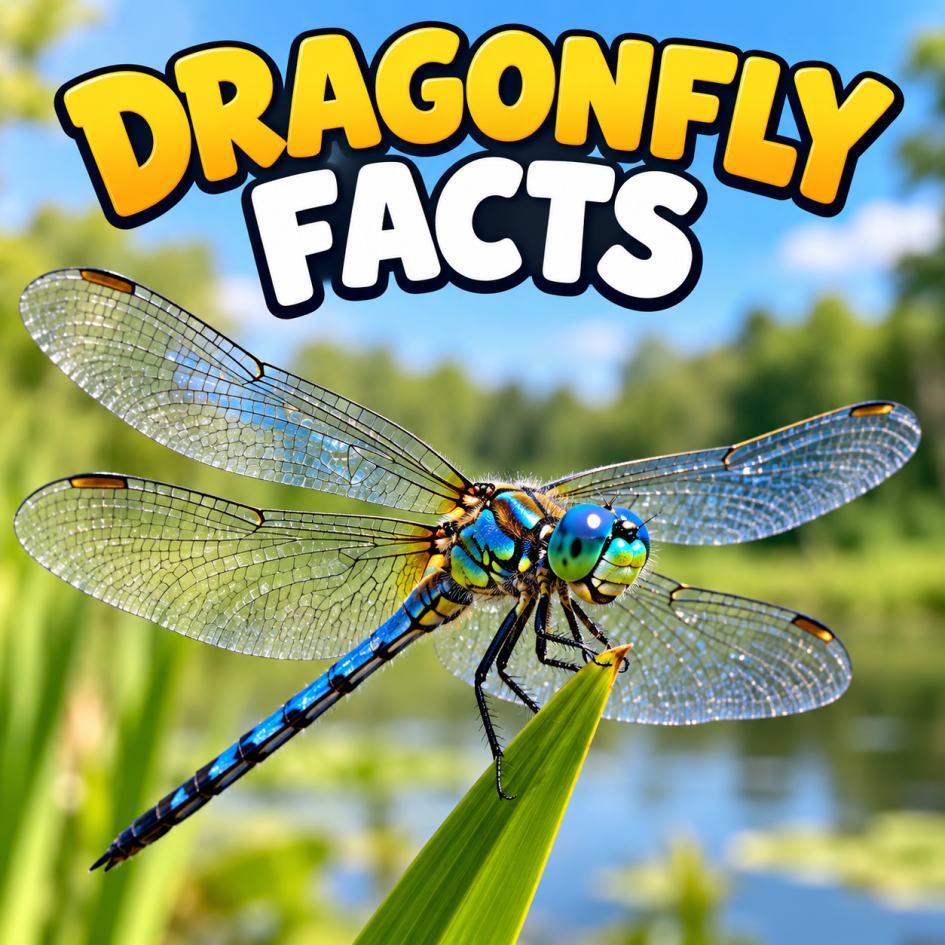
Dragonflies are amazing insects known for their colourful bodies, large eyes and incredible flying skills. They have lived on Earth for millions of years and play an important role in nature. Here are 20 fascinating facts about these remarkable creatures.
1. Dragonflies are ancient insects. Dragonflies have ancestors that lived more than 300 million years ago, long before dinosaurs appeared. Some prehistoric relatives had wingspans of around 70 centimetres.
2. They have enormous eyes. A dragonfly’s head is mostly covered by its two large compound eyes. These eyes contain thousands of tiny units that help it detect movement and see in many directions.
3. They can see almost all around them. Their eyes give them a nearly 360-degree field of vision, helping them spot predators and catch prey while flying.
4. Dragonflies are excellent hunters. They catch mosquitoes, flies, midges and other small insects. They are skilled predators that help control insect populations.
5. They catch prey in mid-air. Rather than simply chasing insects, dragonflies can predict where their prey is going and intercept it while flying.
6. They are incredibly fast. Some dragonfly species can reach speeds of approximately 30 miles per hour (48 kilometres per hour), although speeds vary between species.
7. They have four wings. Unlike many insects, dragonflies can move their four wings independently. This allows them to hover, turn sharply and fly backwards for short distances.
8. They are expert flyers. Dragonflies can hover almost motionlessly in the air, change direction quickly and perform impressive aerial manoeuvres.
9. They spend much of their lives underwater. Dragonflies lay their eggs in or near water. Their young, called nymphs, usually live underwater before becoming adults.
10. Their underwater stage can last for years. Depending on the species and environment, dragonfly nymphs may spend several months or several years growing underwater.
11. Nymphs are hunters too. Young dragonflies eat aquatic animals such as mosquito larvae, small crustaceans and tadpoles. They use a special extendable mouthpart to grab prey.
12. Dragonflies do not have a pupal stage. Unlike butterflies, which develop inside a chrysalis, dragonflies change from aquatic nymphs directly into winged adults.
13. Their wings are transparent. Most dragonflies have clear wings with intricate networks of veins. Some species also have colourful patches or dark markings on their wings.
14. They come in many colours. Dragonflies can be blue, green, red, yellow, brown or black. Some colours result from pigments, while others come from the way light reflects off their bodies.
15. They are found around the world. Dragonflies live on every continent except Antarctica. They are especially common in warm areas with ponds, lakes, rivers and wetlands.
16. They need clean, suitable habitats. Many species depend on healthy freshwater environments to reproduce. Pollution and the destruction of wetlands can threaten their populations.
17. They are harmless to people. Dragonflies do not sting and generally do not bite humans. They are beneficial insects that are best observed without handling them.
18. They have powerful jaws. Dragonflies use strong mouthparts to chew their prey. Their jaws are well suited to catching and eating small insects.
19. They help scientists study the environment. Because dragonflies depend on freshwater habitats during their development, studying their populations can help researchers understand changes in wetland ecosystems.
20. Their lives are much longer than they appear. Although adult dragonflies may live for only a few weeks or months, their entire life cycle, including the underwater nymph stage, can last several years.
Conclusion
Dragonflies are far more than beautiful insects. Their remarkable eyesight, aerial agility and fascinating life cycle make them important members of the natural world. By controlling insect populations and depending on healthy freshwater habitats, they also help maintain balanced ecosystems. Next time you see a dragonfly near a pond or garden, take a moment to appreciate this extraordinary little hunter!
Leave a Reply