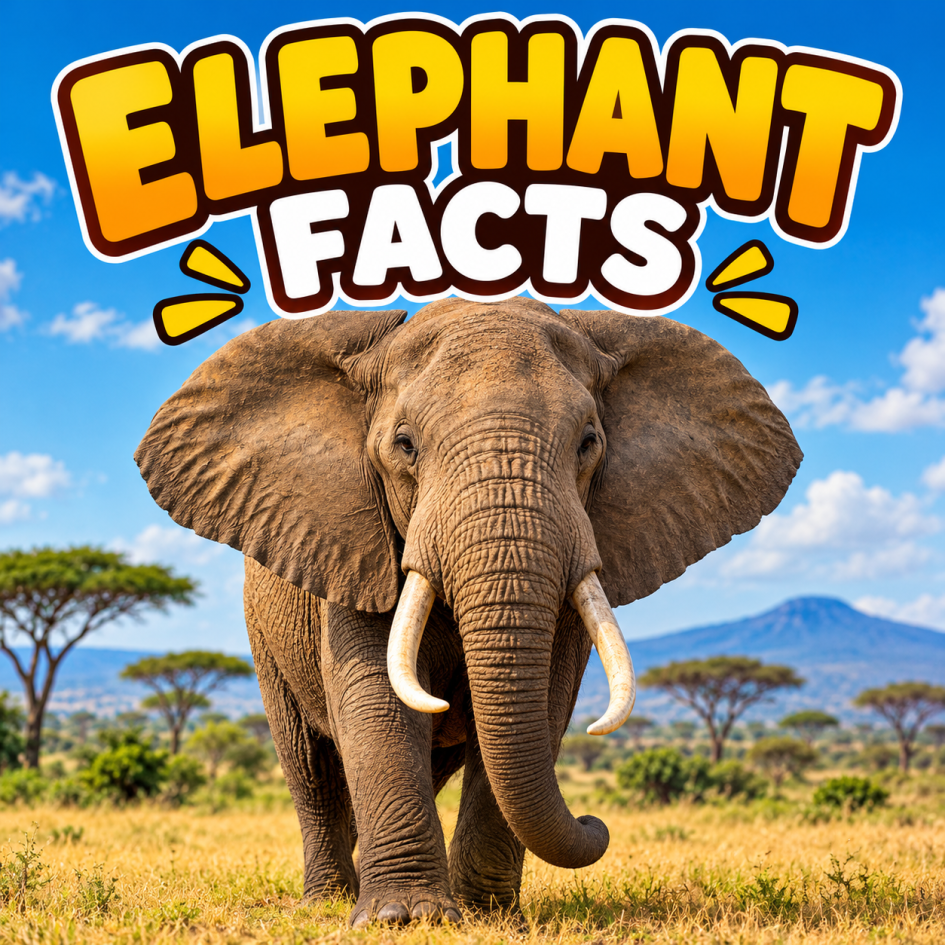
Elephants are some of the largest, smartest and most fascinating animals on Earth. They have amazing memories, strong family bonds and unique bodies that help them survive in the wild. Here are 20 incredible facts about elephants!
1. Elephants are the largest land animals.
African elephants are the largest land animals in the world. Adult males can weigh up to around 6,000 kilograms, which is heavier than a large car!
2. There are three living elephant species.
The three species are the African savanna elephant, the African forest elephant and the Asian elephant. They differ in size, appearance and habitat.
3. Elephants have enormous ears.
African elephants have particularly large ears that help them cool down. They flap their ears to release heat and keep their bodies at a comfortable temperature.
4. An elephant’s trunk is incredibly useful.
An elephant’s trunk is a combination of its nose and upper lip. It helps the animal breathe, smell, drink, pick up food and communicate with other elephants.
5. Elephants have excellent memories.
Elephants can remember familiar individuals, water sources and migration routes for many years. This memory helps them find food and water, especially during droughts.
6. They are very intelligent.
Elephants can solve problems, learn new behaviours and recognise themselves in mirrors in certain tests. Their intelligence is often compared with that of great apes and dolphins.
7. Elephants are herbivores.
Elephants eat plants rather than meat. Their diet includes grass, leaves, bark, roots and fruit. They can spend many hours each day feeding.
8. They need lots of water.
An adult elephant may drink around 100–200 litres of water a day, depending on its size, activity and the weather.
9. Baby elephants are called calves.
An elephant calf usually weighs around 90–120 kilograms at birth. It can stand and walk shortly after being born.
10. Elephants have long pregnancies.
An elephant’s pregnancy lasts approximately 22 months, the longest of any living land mammal.
11. They live in family groups.
Female elephants often live in close family groups led by an experienced older female called a matriarch. She helps guide the herd to food and water.
12. Male elephants often leave their family groups.
As they grow older, males usually leave their birth groups. They may live alone or spend time with other males.
13. Elephants communicate in surprising ways.
They use trumpets, rumbles, body movements and touch to communicate. Some of their low-frequency sounds can travel long distances.
14. They can feel vibrations through the ground.
Elephants can detect certain vibrations using sensitive structures in their feet and trunks. These signals may help them sense distant sounds and other elephants.
15. Elephant tusks are actually teeth.
Tusks are elongated incisor teeth. Elephants use them to dig, strip bark and move objects. Sadly, tusks also make them targets for ivory poaching.
16. Elephants love mud baths.
Rolling in mud helps protect their skin from the sun and biting insects. Dust and mud can also act as a natural skin covering.
17. They help the environment.
Elephants spread seeds through their dung and create pathways through vegetation. These activities can help shape habitats and support other wildlife.
18. Elephants can live for decades.
Wild elephants commonly live for around 60–70 years, although lifespan varies depending on species and living conditions.
19. Elephants can show strong emotions.
They display behaviours associated with affection, distress and social bonding. Family members may comfort one another with gentle trunk touches.
20. Elephants need our protection.
Habitat loss, conflict with humans and poaching threaten elephant populations. Protecting their habitats and preventing illegal ivory trade are important ways to help them survive.
Conclusion
Elephants are remarkable animals with incredible memories, complex social lives and important roles in nature. From their powerful trunks to their close family relationships, there is always something new to discover about these gentle giants. Protecting elephants helps preserve not only these amazing animals but also the ecosystems they call home.
Leave a Reply