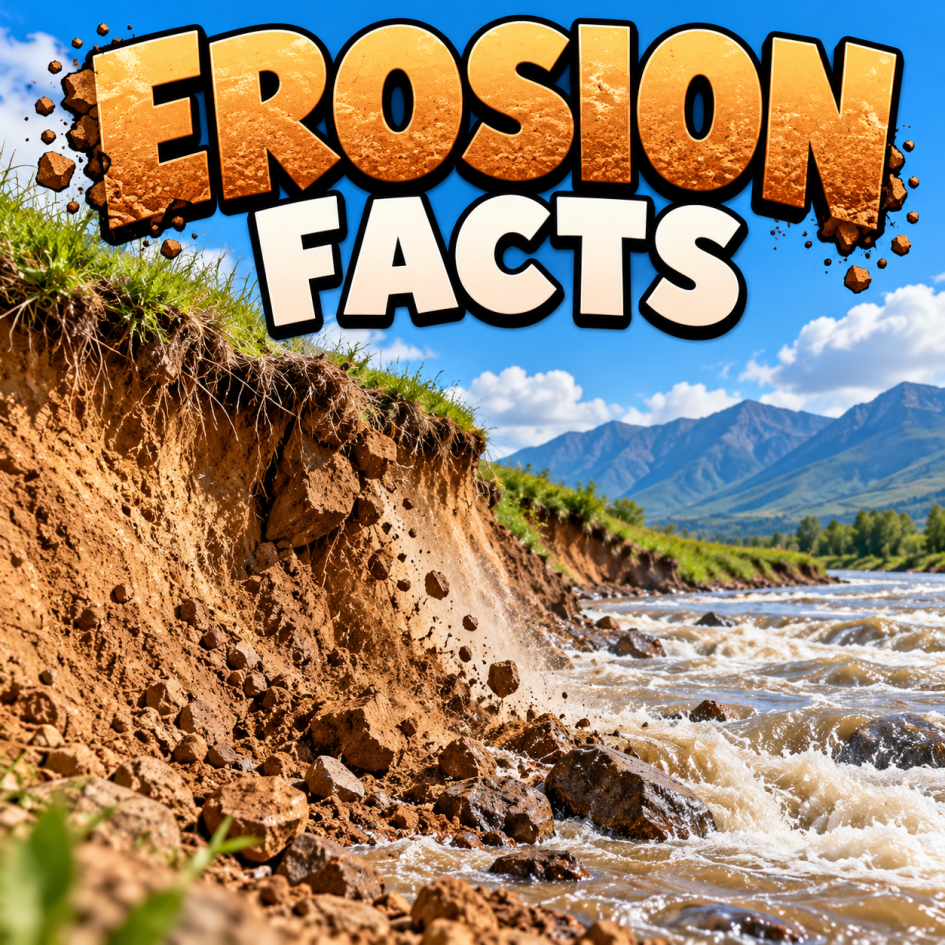
Erosion is a natural process that shapes the Earth’s surface. It involves the movement of rock, soil and sediment from one place to another by water, wind, ice or gravity. Here are 20 interesting facts about erosion.
1. Erosion changes the Earth’s surface. It gradually wears away rocks, soil and landforms, helping to shape mountains, valleys, cliffs and beaches.
2. Water is a major cause of erosion. Rain, rivers, streams and ocean waves can carry away soil and break down rocks over time.
3. Wind causes erosion. In dry areas and deserts, strong winds pick up sand and dust and transport them to new locations.
4. Glaciers cause erosion. Glaciers are huge masses of moving ice that scrape against the land, wearing away rocks and carving deep valleys.
5. Gravity contributes to erosion. Gravity pulls loose soil, rocks and sediment downhill, sometimes causing landslides and rockfalls.
6. Erosion can happen slowly. Some forms of erosion take thousands or millions of years to create noticeable changes in the landscape.
7. Erosion can also happen quickly. Heavy rainfall, floods and powerful storms can remove large amounts of soil in just a few hours.
8. Plant roots help prevent erosion. Roots hold soil together, reducing the amount of soil washed away by rain or blown away by wind.
9. Deforestation increases erosion. When trees are cut down, the soil loses much of the protection provided by their roots, leaves and branches.
10. Farming can increase erosion. Ploughing fields and leaving soil bare can make it easier for rainwater and wind to carry soil away.
11. Rivers create valleys. Flowing water gradually erodes the land, cutting channels and forming valleys over long periods.
12. Coastal erosion changes beaches and cliffs. Waves repeatedly strike the coastline, breaking down rocks and moving sand along the shore.
13. Erosion can damage buildings and roads. When soil is removed from around foundations, bridges or road surfaces, structures can become unstable.
14. Soil erosion reduces soil fertility. The topsoil contains many nutrients needed by plants, so losing it can make farming more difficult.
15. Deserts are shaped by erosion. Wind and occasional flowing water help create features such as rock arches, hollows and unusual rock formations.
16. Erosion is different from weathering. Weathering breaks rocks down into smaller pieces, while erosion involves moving those materials away.
17. Human activities can speed up erosion. Mining, construction, overgrazing and removing vegetation can expose soil to erosive forces.
18. Erosion can pollute rivers. Sediment washed into waterways can make water cloudy and harm fish and other aquatic organisms.
19. There are ways to control erosion. Planting trees, growing ground cover, building terraces and using barriers can help keep soil in place.
20. Erosion is part of the natural rock cycle. It transports sediment that can eventually settle, become compacted and form new sedimentary rocks over millions of years.
Conclusion
Erosion is an important natural process that continuously changes our planet. Although it helps create beautiful landscapes and fertile environments, excessive erosion can damage farmland, buildings and ecosystems. Understanding its causes and effects helps people protect soil, rivers and coastlines for the future.
Leave a Reply