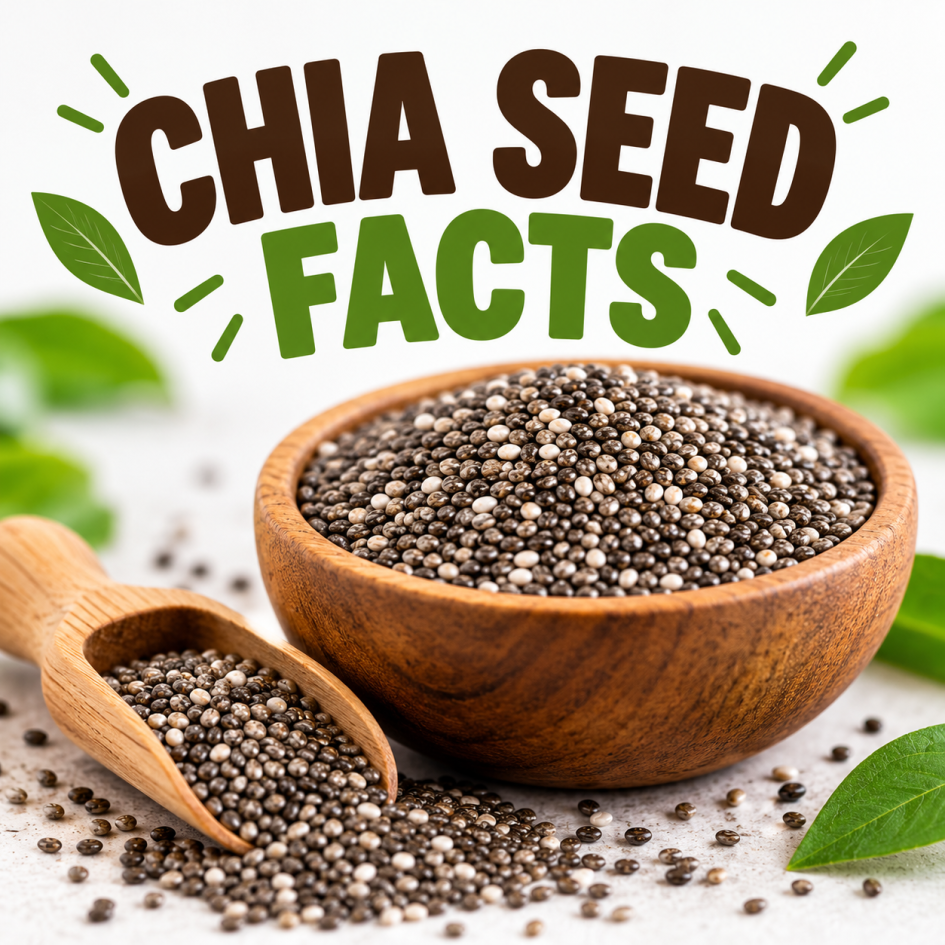
Chia seeds are tiny nutritional powerhouses packed with fibre, healthy fats, protein and essential minerals. Originally cultivated in Central America, they have become a popular ingredient in healthy diets worldwide. Here are 20 fascinating facts about chia seeds and their potential health benefits.
1. Chia seeds come from a flowering plant.
Chia seeds come from Salvia hispanica, a flowering plant belonging to the mint family. The plant is native to parts of Mexico and Guatemala.
2. They were eaten by ancient civilisations.
The Aztecs and Maya cultivated chia seeds thousands of years ago. They valued them as a source of nourishment and used them in traditional foods.
3. Chia means strength.
The word “chia” is commonly associated with the Mayan word for strength, reflecting the seed’s historical importance as a source of energy.
4. They are rich in fibre.
Chia seeds contain approximately 34 grams of dietary fibre per 100 grams. This can support regular bowel movements and help maintain digestive health.
5. They contain omega-3 fatty acids.
Chia seeds are an excellent plant source of alpha-linolenic acid (ALA), an essential omega-3 fatty acid that supports normal heart health.
6. They absorb water.
Chia seeds can absorb several times their weight in liquid, forming a gel-like coating. This makes them useful for puddings, drinks and thickening recipes.
7. They contain plant-based protein.
With roughly 16–17 grams of protein per 100 grams, chia seeds can contribute to daily protein intake, particularly in vegetarian and vegan diets.
8. They provide essential minerals.
Chia seeds contain calcium, magnesium, phosphorus and manganese, which help support normal bone health and other important bodily functions.
9. They contain antioxidants.
Chia seeds contain antioxidant compounds that help protect their fats from oxidation. A balanced diet rich in plant foods also supports the body’s natural defences against oxidative stress.
10. They can support digestive health.
Their fibre content helps support healthy digestion. Increasing fibre gradually and drinking enough water can help reduce bloating or discomfort.
11. They may help you feel fuller.
Chia seeds absorb liquid and contain fibre, protein and fat. These nutrients may contribute to feelings of fullness when included in balanced meals.
12. They can be used as an egg substitute.
Mix one tablespoon of chia seeds with approximately three tablespoons of water. Allow the mixture to thicken for around 10–15 minutes before using it in suitable baking recipes.
13. They come in different colours.
Chia seeds are commonly black, white or a mixture of both. Both colours offer similar nutritional benefits, although their precise composition can vary.
14. They are naturally gluten-free.
Chia seeds do not naturally contain gluten, making them suitable for gluten-free diets. People with coeliac disease should choose products protected against cross-contamination.
15. They contain very little sugar.
Plain chia seeds contain minimal naturally occurring sugar, making them a useful addition to meals for people seeking lower-sugar ingredients.
16. They can be eaten without grinding.
Unlike some other seeds, chia seeds can generally be eaten whole because they soften in liquid and are digestible without grinding.
17. They are useful in overnight oats.
Adding chia seeds to oats and milk or a plant-based alternative creates a thicker, creamier breakfast while increasing its fibre and nutrient content.
18. They can help thicken sauces.
When hydrated, chia seeds form a gel that can thicken smoothies, jams and sauces without requiring traditional thickening agents.
19. They are energy-dense.
Chia seeds provide approximately 486 calories per 100 grams. A typical two-tablespoon serving of around 28 grams supplies roughly 135–140 calories.
20. They are easy to add to everyday meals.
Sprinkle chia seeds over yoghurt, blend them into smoothies, mix them into porridge or prepare chia pudding. Start with small portions and increase gradually as your body adjusts to the fibre.
Final thoughts
Chia seeds are a versatile, nutrient-rich food that can contribute fibre, plant-based omega-3 fats, protein and essential minerals to your diet. However, they are not a miracle food, and their benefits are best enjoyed as part of a varied, balanced eating pattern. For easier consumption, especially if you have difficulty swallowing, allow chia seeds to absorb liquid before eating them.
Leave a Reply