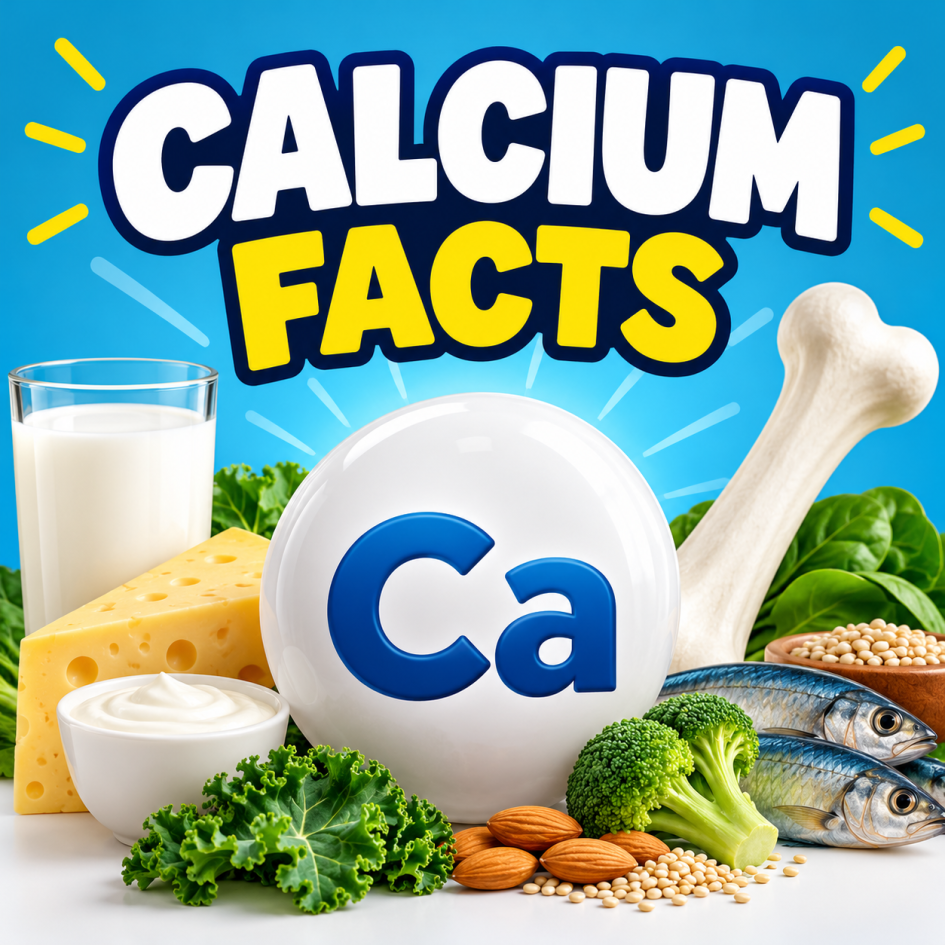
Calcium is an essential mineral that helps keep our bodies healthy and strong. It is best known for building strong bones and teeth, but it also plays many other important roles in the human body. Here are 20 interesting facts about calcium.
1. Calcium is a chemical element.
Calcium is a chemical element with the symbol Ca and atomic number 20. It belongs to a group of elements called alkaline earth metals.
2. Calcium is essential for strong bones.
Almost 99% of the calcium in the human body is stored in bones and teeth. It helps make them strong and supports their structure.
3. Calcium helps build healthy teeth.
Calcium combines with other minerals to strengthen tooth enamel, helping protect teeth from everyday wear and damage.
4. Calcium is important for muscle movement.
Our muscles need calcium to contract and relax properly. Without enough calcium, normal muscle function can be affected.
5. Calcium helps the heart beat.
Calcium plays an important role in the electrical signals that control the heartbeat and helps heart muscle cells contract.
6. Calcium supports nerve function.
The nervous system uses calcium to help nerve cells communicate with one another by releasing chemical messengers.
7. Milk is a good source of calcium.
Milk contains calcium that the body can absorb and use. Other dairy products, including yoghurt and cheese, also provide calcium.
8. Some vegetables contain calcium.
Vegetables such as kale, broccoli and pak choi provide calcium. Calcium absorption varies between different vegetables.
9. Calcium is found in fish.
Fish such as sardines and canned salmon can provide calcium, particularly when their soft, edible bones are eaten.
10. Calcium helps blood clot.
Calcium is necessary for several steps in blood clotting, helping the body stop bleeding after an injury.
11. Calcium is important during childhood.
Children need calcium to develop strong bones and teeth as they grow. Adequate calcium intake supports healthy bone development.
12. Teenagers need plenty of calcium.
During adolescence, bones grow rapidly and accumulate minerals. Getting enough calcium during these years helps build strong bones.
13. Calcium remains important in adulthood.
Adults need calcium to maintain their bones and replace the small amounts lost through normal bodily processes.
14. Vitamin D helps calcium absorption.
Vitamin D helps the intestines absorb calcium from food. Without sufficient vitamin D, the body may struggle to absorb enough calcium.
15. Calcium deficiency can weaken bones.
Not getting enough calcium over time can contribute to poor bone health. Severe deficiency may cause health problems, including weakened bones.
16. Calcium is the most abundant mineral in the body.
Calcium is the most abundant mineral in the human body, making it vital for many biological processes.
17. Calcium is found in the Earth’s crust.
Calcium occurs naturally in rocks, minerals and soil. Limestone and chalk contain large amounts of calcium carbonate.
18. Calcium is used in construction.
Calcium compounds are important ingredients in cement, plaster and other building materials used to construct houses and buildings.
19. Too much calcium can be harmful.
Although calcium is essential, excessive intake, particularly from supplements, can cause problems such as kidney stones and constipation in some people.
20. Calcium helps keep the body working properly.
From supporting strong bones to helping muscles, nerves and the heart function, calcium is essential for maintaining overall health.
Conclusion:
Calcium is much more than a mineral for strong bones and teeth. It supports many vital functions in the human body and has important uses in nature and industry. Eating a balanced diet with calcium-rich foods helps people maintain healthy bones and support their overall well-being.
Leave a Reply